

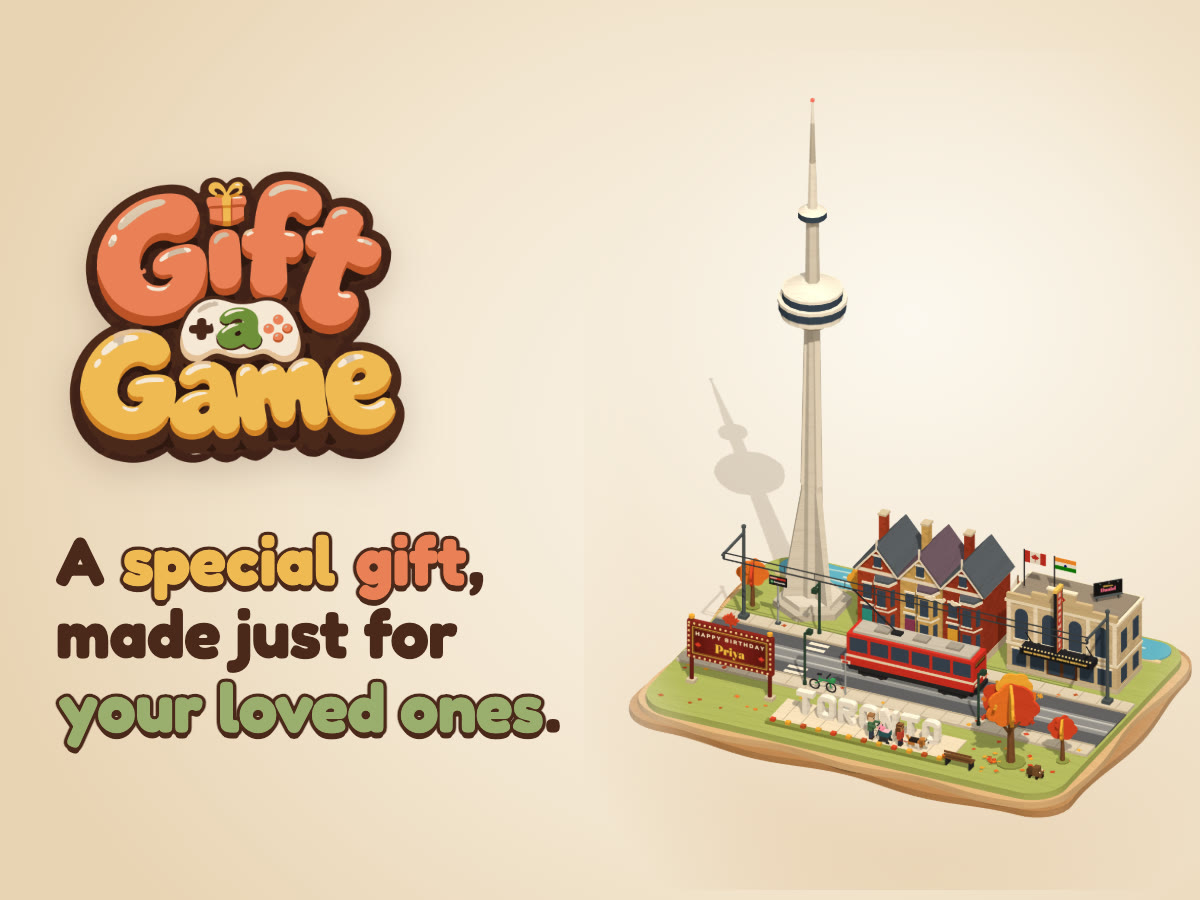
Their city as a tiny video game: their name on the sign, their family in the streets, and your message waiting at the end.
CA$500 profit by New Year's Eve
A real business test with a clear finish line: CA$500 profit by Dec 31, 2026, which is about 55 sales, with a first checkpoint of 5 sales by Dec 1. One rule kept the numbers honest: friends get gifts, never a sales pitch. Every sale has to come from a stranger.
The buyer is mostly a woman aged 18 to 34 in the US or Canada, on her phone. She finds gifts on TikTok, Instagram and Pinterest, decides in under a minute, and is often buying at the last minute for a partner, a best friend or a parent far away.
A special gift, made just for your loved ones
People want a gift that says I made this for you more than one that costs a lot. Digital gifts usually feel like "just a link". Gift a Game answers that by making the receiver build something: the gift takes time to open, it is clearly about them, and it ends with a moment worth sharing.
For the giver it is a personalised gift in about 10 minutes, ready to send tonight. For the receiver it is a small game made only for them.
Their side of the gift, beat by beat
A gift box opens with two taps.
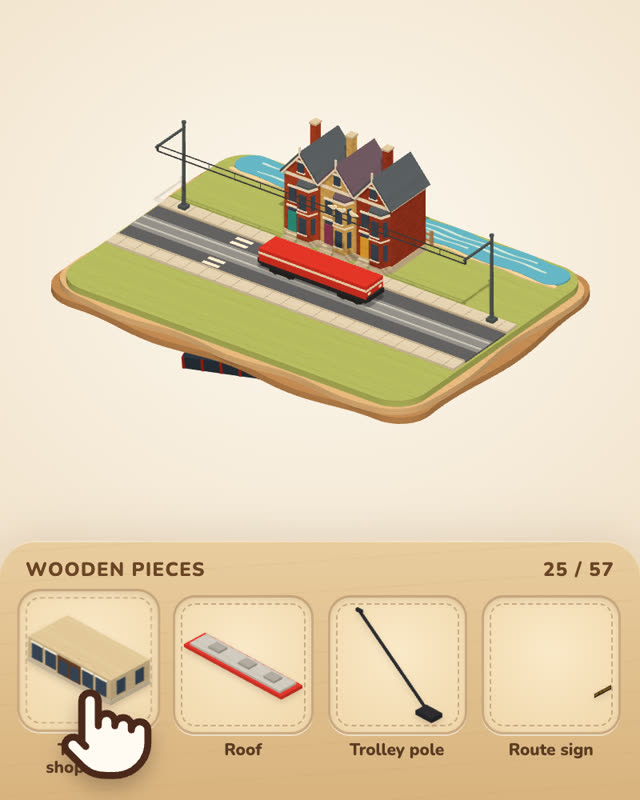
The first piece snaps onto the board.
Their name on the theatre sign.
A local story at every chapter.
Their family and pets out for a walk.
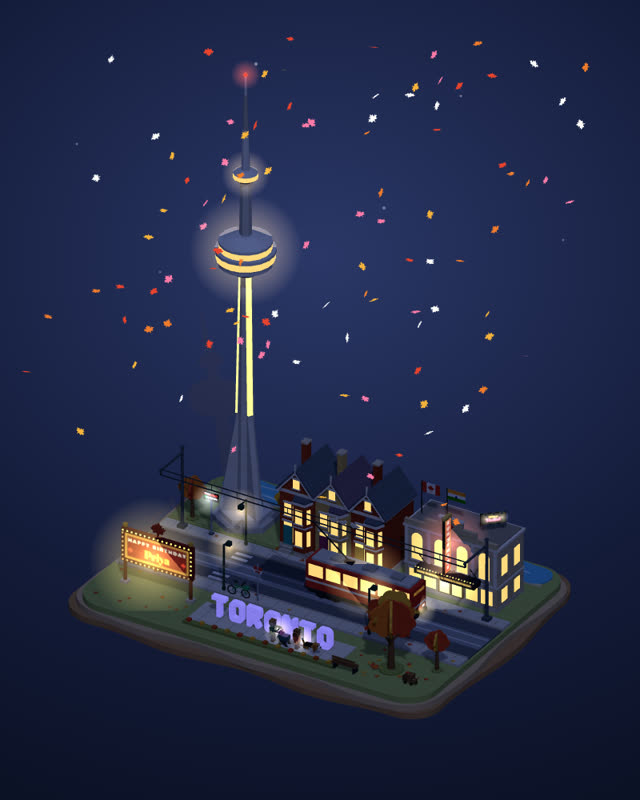
Lights on, confetti, the name glows.
Your words, signed by you.
Send a thank-you, or make one.
From one city to a live shop in a week
I ran the studio like a small company on a daily cycle: research, build, test, review. I approved every city, every post and every spend. Little Toronto came first, then the gift maker, checkout, five more cities, the shop and a content system.
What made it work on a phone
- A wooden-puzzle feel. Every piece lands with a little bounce, a click and a puff of sawdust, so ten minutes of building feels like play, not a loading screen.
- A strict budget. Each city is tested for graphics and memory on older phones, plus automated checks for flicker, cameras and the full gift flow in every city.
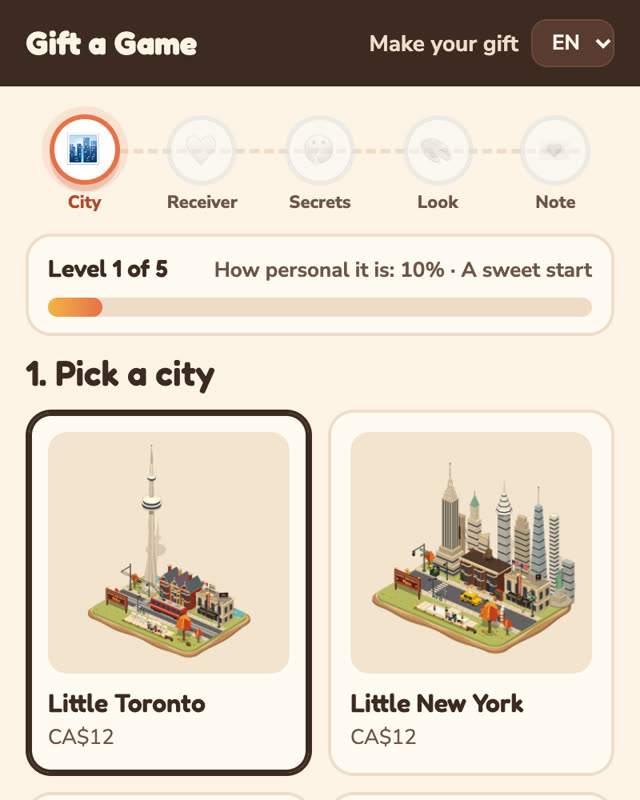
- Local, not generic. Each city has its own landmarks and short stories: the 506 streetcar in Toronto, the Hollywood sign in LA, the Statue of Liberty in a working harbour in New York.
- Built to be found. Gift guide pages (for mom, for a boyfriend, last minute), an FAQ and structured data, so the shop appears when someone asks a search engine or an assistant for a personalised gift.
What we heard, and what changed the same day
The first real players called it "epic" and built it together as a couple. Then the receiver went and made her own gift for someone else.
The card closed after a fixed 3.2 seconds. It now stays 7 to 13 seconds depending on how long the story is, and a tap still closes it sooner.
The end of the game now leads with a thank-you picture to send back to the giver, with the website on it, then "Make one for someone you love". Sales that start from a finished gift are tagged, so the loop can be measured.
Every country's flag is now in (203, Taiwan and Palestine included), picked with a search box instead of a long list.
When the home country matches the city's, the game flies the city's own flag instead: Toronto, New York, LA (zigzags included) and the rest.
Rebuilt with the Hollywood sign on golden hills, the downtown skyline, Walk of Fame stars and a beach with a pier.
Beaches moved to the front in LA, Miami and Vancouver. New York, a port and not a beach, got a harbour promenade, a ferry and the Statue of Liberty.
Organic first, ads only when strangers buy
- Pinterest first. Gift ideas are searched there weeks ahead and pins keep working for months. Every video also becomes a pin, plus its own stills and GIFs, all linking to the shop.
- Instagram and TikTok. Three short videos a day. Hooks come from research on what is trending and speak to the person directly: "Would your mom play a video game?"
- One clear offer. 25% off for Black Friday (Nov 27 to 30), then a last-minute Christmas window.
- A rule for ads. No paid ads until the funnel is measurable, strangers buy on their own, one post clearly wins, and the cost per sale fits a CA$10 profit per gift.
Coded with Claude, connected into a business
I built Gift a Game with Claude as my coding partner. I set the direction, designed the game, the cities and the brand, and made every call on what shipped; Claude wrote and tested the code with me. The biggest lesson was not the game itself but connecting the pieces into something a stranger can find, trust and pay for.
- Payments. Stripe Checkout with no account, sales prices that switch on by date, tax, and a gift link that is signed only after the payment clears.
- Hosting. One Cloudflare Worker serves the shop, the gift API and short links, with the gift's words encrypted in the buyer's browser.
- Measurement. Anonymous analytics with no cookies, so I can see the funnel from first visit to paid gift, and now how many gifts each gift brings in.
- Content. A weekly plan of videos and pins with voice-over and cosy music, scheduled to Instagram, TikTok and Pinterest only after I approve the week.
- A small agent team. A CEO, an analyst, a studio and a game agent run every night and bring me decisions on one board. Nothing posts, ships or spends without my yes.
Results so far, and lessons
The shop opens on Nov 24, 2026, so there are no sales numbers yet: a live site, live payments, six playable cities and the first real players. The next checkpoint is 5 sales from strangers by Dec 1.
Lessons
- Real players beat opinions. One couple found what a week of internal testing missed.
- The gift is the moment, not the file. The value is the receiver building it and finding your words, so the building had to feel good.
- Every finish is a new start. The end of the game is the best ad there is, so it asks the receiver to share and to make one.
- Say it directly. "A video game just for your mom" beats clever wording.
- A product is its connections. The game took days; making it findable, payable, measurable and shareable is what made it sellable.